







Introduction
A great idea isn’t enough to attract investors — you need a compelling story. That story often takes shape in the form of a pitch deck. For startups, entrepreneurs, and even established businesses, a well-structured pitch deck is the difference between sparking interest and being forgotten.
Yet creating one is not easy. Traditional pitch decks require design skills, storytelling finesse, and hours of formatting. Many founders waste time tinkering with fonts and colors instead of refining their vision. That’s where AI presentation tools come in. With today’s AI, you can draft, design, and polish a professional pitch deck in a fraction of the time.
In this guide, we’ll explore how to build a winning pitch deck step by step, using AI tools to simplify the process while ensuring your story resonates with investors.
Why Pitch Decks Matter for Business Success
Your pitch deck is often the first impression an investor has of your business. Research shows that venture capitalists spend only about 3 minutes and 44 seconds reviewing a deck. That means every slide needs to grab attention and communicate clearly.
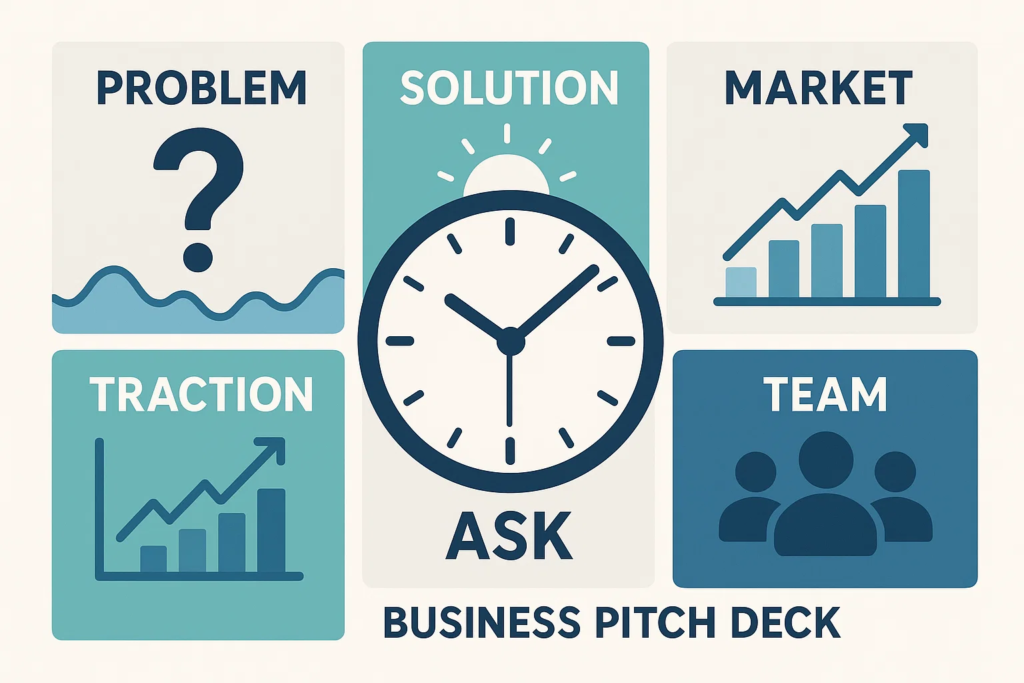
A strong pitch deck:
- Frames the problem and solution convincingly.
- Shows the market opportunity.
- Demonstrates traction, financial potential, and team expertise.
- Ends with a clear ask.
Unfortunately, many founders fall into common traps:
- Slides overloaded with text.
- Poor visuals and inconsistent branding.
- No logical flow of the story.
AI tools can help solve these issues by automating design, generating professional layouts, and even suggesting narrative structures that align with investor expectations.
The Rise of AI in Presentation Design
The journey of presentations has evolved: from static PowerPoint templates to cloud-based design platforms and now AI-powered presentation builders. The latest AI tools don’t just speed up slide creation — they help shape the story.
Key benefits of AI in pitch deck creation include:
- Speed: Generate an entire deck from a short text prompt.
- Consistency: Maintain brand colors, fonts, and professional layouts.
- Creativity: Suggest visuals, infographics, and dynamic charts.
- Clarity: Refine wording for concise, persuasive messages.
From text-to-slide generation (e.g., Tome, Gamma) to AI-driven data visualization (e.g., Beautiful.ai, Canva AI), founders now have a powerful toolkit to build investor-ready decks in hours instead of days.

Core Elements of a Winning Pitch Deck
Before diving into tools, let’s recap the essential slides investors expect:
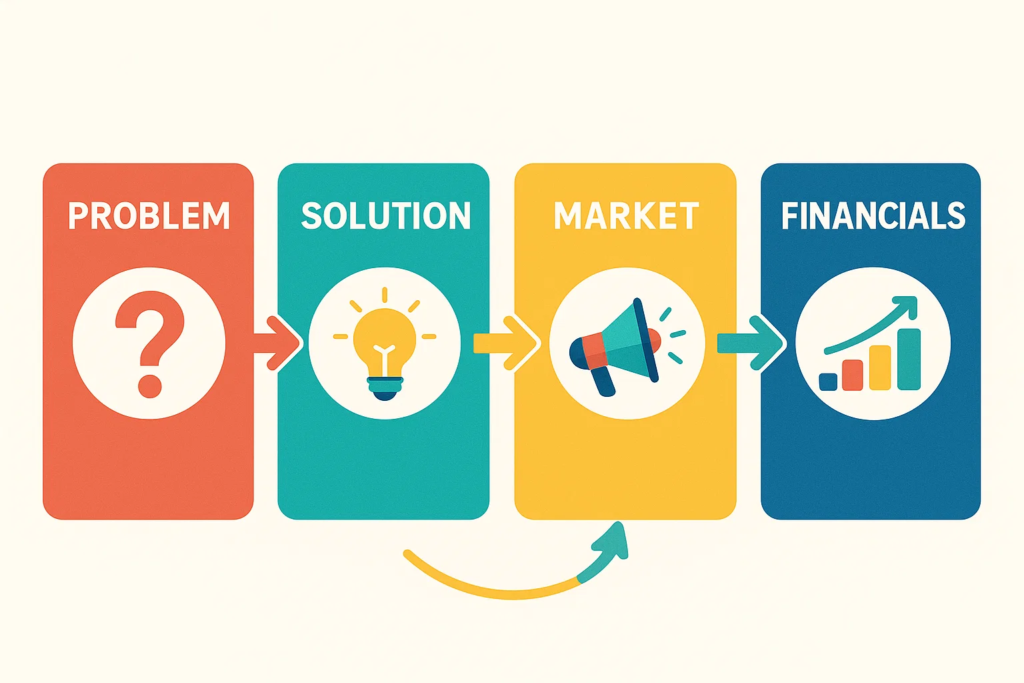
- Problem Statement – What pain point exists in the market?
- Solution – How your product/service solves it uniquely.
- Market Opportunity – Size of the addressable market.
- Business Model – How you make money.
- Traction & Metrics – Evidence of growth (users, revenue, partnerships).
- Competitive Landscape – Who else is playing in the space, and how you stand out.
- Go-to-Market Strategy – Your plan for acquiring customers.
- Financials & Projections – Expected revenues, costs, and growth.
- Team – Why your team can execute.
- Ask – Funding required and how it will be used.
AI tools can assist at every stage — from summarizing problems into investor-friendly wording, to auto-generating market charts, to designing financial graphs.
Step-by-Step Guide: Building a Pitch Deck With AI Tools
1. Brainstorming & Storyboarding
Start by drafting your story arc. Use AI writing assistants like ChatGPT or Jasper to:
- Generate different narrative flows.
- Refine problem and solution statements.
- Create multiple versions of taglines or value propositions.
2. Slide Generation
Tools like Tome, Gamma, or Beautiful.ai allow you to enter a description (e.g., “A pitch deck for a SaaS startup in the fintech industry”) and generate a full set of slides. These decks often include suggested visuals, placeholder data, and consistent design templates.
3. Design & Branding
AI-powered design platforms like Canva Magic Design ensure brand consistency:
- Upload your logo and color scheme.
- Let AI apply branding automatically across all slides.
- Use AI layout suggestions to maintain balance and clarity.
4. Data Visualization
Numbers alone don’t persuade; visuals do. AI tools can:
- Turn spreadsheets into engaging charts.
- Suggest best-fit data visualizations.
- Automatically format graphs for clarity.
For example, tools like Visme AI or Beautiful.ai can transform complex financial projections into easy-to-read visuals.
5. Polishing the Story
Use AI writing assistants to:
- Refine slide headlines.
- Shorten text into concise investor-friendly bullets.
- Suggest persuasive language for key slides like the “Ask.”
6. Practice & Feedback
Don’t stop at slide design. Tools like Yoodli AI or AI-powered rehearsal platforms can:
- Analyze your tone, pacing, and filler words.
- Provide feedback on delivery.
- Simulate investor questions to prepare you for Q&A.
Best AI Tools for Pitch Deck Creation
Here’s a curated list of tools to consider:
- Beautiful.ai – Best for automated slide design.
- Tome – AI-first presentation builder; generates decks from prompts.
- Gamma – Clean storytelling-focused decks.
- Pitch – Collaborative pitch deck creation.
- Canva Magic Design – Easy branding and visual consistency.
- Visme AI – Strong in data visualization and infographics.
- ChatGPT – Ideal for refining messaging, storytelling, and content.
Each tool has its strengths — combine them for maximum effect (e.g., ChatGPT for content + Beautiful.ai for visuals).
Case Study: Building a Deck in 48 Hours
Imagine a fintech founder preparing for an investor meeting in two days. Instead of starting from scratch:
- They use ChatGPT to draft the story arc and refine their problem statement.
- Tome generates a 12-slide deck based on that draft.
- Canva AI applies the startup’s branding across slides.
- Visme transforms financial data into polished charts.
- Finally, the founder rehearses using Yoodli AI for delivery feedback.
The result? A professional, persuasive pitch deck built in under 48 hours — saving days of manual effort while boosting confidence.
Tips to Make Your AI Pitch Deck Stand Out
- Balance AI and human input: AI handles structure and visuals, but your insights give authenticity.
- Keep it simple: Aim for 10–15 slides max.
- Focus on visuals: Investors skim — strong visuals grab attention.
- Review everything: AI can make errors; always fact-check data and copy.
- Tailor to your audience: Customize decks for different investors or industries.
The Future of AI in Business Presentations
Looking ahead, AI will play an even bigger role:
- Personalized decks: Tailored automatically to each investor’s portfolio.
- Interactive presentations: AI-enabled Q&A within slides.
- AR/VR immersive pitch experiences.
- Predictive storytelling: AI suggesting deck flows based on investor preferences.
As AI continues to evolve, the boundaries of what a pitch deck can be will expand beyond static slides.

Conclusion
Creating a pitch deck no longer needs to be a stressful, design-heavy process. With AI tools, founders can quickly build professional, compelling presentations that win investor attention. From brainstorming to design to rehearsal, AI accelerates every step of the journey.
If you’re preparing your next pitch, explore AI presentation tools to streamline the process. Platforms like AIToolBank make it easy to discover, compare, and choose the right AI tools for your needs. With the right mix of technology and storytelling, your pitch deck could be the key to securing your next big opportunity.